
A fence can block unwanted views, define property boundaries, and make outdoor spaces feel more secluded. However, height alone does not determine how much privacy a fence provides. Panel design, material, surrounding buildings, and the position of outdoor living areas all influence how effectively a boundary limits visibility.
Homeowners considering fencing designed for privacy should look beyond the height of the structure. A tall fence with wide gaps may offer less visual protection than a shorter, solid boundary. Understanding how different features work together helps homeowners choose a practical solution for their property.
Does a Taller Fence Always Provide More Privacy?
Height is often the first consideration when choosing a privacy fence. A taller structure can block views from neighbouring gardens, footpaths, and nearby roads. However, its effectiveness depends on where people are standing and what they can see over the boundary.
A fence that screens a ground-level patio may do little to prevent overlooking from an upstairs window. Likewise, a raised neighbouring deck can provide a clear view into a garden despite a relatively high boundary.
The Australian Building Codes Board explains that building requirements can depend on factors such as the type and location of a structure. Homeowners should also check applicable state and local fencing rules before deciding on height.
Solid Panels or Slatted Fencing: Which Blocks More Views?
Solid fencing provides a continuous visual barrier. Timber boards, composite panels, and other opaque materials can prevent direct views through a boundary when properly installed.
Slatted fencing offers a different balance. Its spaced panels create a more open appearance and can allow air and light to pass through. However, wider gaps make it easier to see people, furniture, and activities on the other side.
Horizontal slats can appear more private from certain angles, especially when panels overlap. Their effectiveness still depends on spacing, orientation, and the position of the viewer.
Research published in the Building and Environment journal has examined how different urban design features influence airflow around buildings. This highlights an important consideration: a completely solid boundary can change local airflow, while more open construction allows air to pass through.
For homeowners, the choice involves balancing visual screening, ventilation, natural light, and the desired appearance of the garden.
Why Panel Gaps Matter More Than They Appear
Small openings can make a noticeable difference when someone looks through a fence from a particular angle. Gaps between boards, underneath panels, or around gates may expose areas that homeowners intended to screen.
Installation quality also matters. Uneven panels and poorly fitted gates can create unwanted sightlines even when the fence itself uses opaque materials.
Timber requires particular attention because moisture changes can affect its dimensions. The USDA Forest Products Laboratory explains that wood expands and contracts as its moisture content changes. This movement can affect the spacing between boards over time.
Checking panel alignment, gate clearance, and expected material movement can help preserve privacy after installation.
What Changes When You Choose Different Materials?
Material selection affects durability, maintenance, appearance, and the type of visual barrier a fence can provide.
- Timber offers a traditional appearance and can provide effective screening with closely fitted boards. It requires suitable finishing and ongoing maintenance.
- Composite fencing can provide an opaque barrier with a consistent appearance. Performance and maintenance requirements depend on the product.
- Metal fencing can use solid sheets or closely spaced panels. Its privacy depends on the design rather than the material alone.
- Masonry walls provide continuous screening and a substantial physical boundary, although their construction requirements differ from lightweight fencing.
The WoodSolutions technical resources explain how timber durability depends on factors including species, treatment, exposure, and intended use. Similar attention to product specifications is useful when comparing other fencing materials.
Where Traditional Boundary Fencing Falls Short
Even a carefully designed fence cannot address every overlooking problem. Neighbouring balconies, elevated gardens, and upper-storey windows may create sightlines that extend above the boundary.
Rather than automatically increasing fence height, homeowners can identify the areas where privacy is most important. A seating area, outdoor dining space, or swimming pool may benefit from targeted screening. Privacy screens, pergolas, and carefully positioned planting can also complement smart outdoor living systems , helping homeowners create comfortable and secluded spaces while accommodating modern outdoor features.
Privacy screens, pergolas, and carefully positioned planting can help interrupt views from elevated positions. Their placement should reflect the actual direction of overlooking.
Can Landscaping Make a Fence More Private?
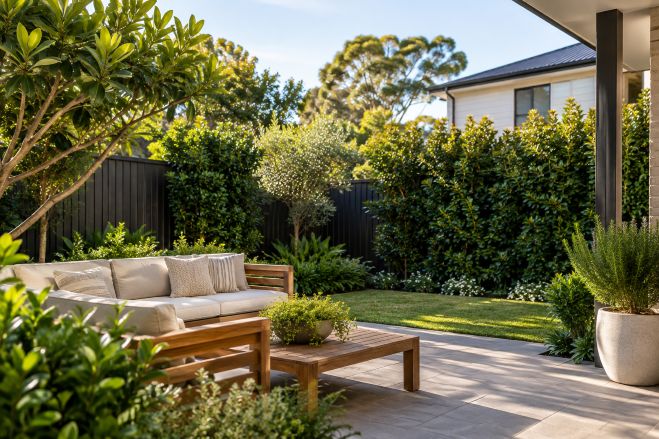
Landscaping can soften a boundary while adding another layer of screening. Dense shrubs, hedges, and climbing plants can reduce visibility through gaps or above lower fences.
The Royal Horticultural Society identifies hedges and screening plants as options for creating privacy in gardens. However, plant selection should account for available space, growing conditions, mature size, and maintenance.
Young plants may provide limited screening until they establish. Deciduous species can also lose much of their visual coverage during certain seasons.
Combining an opaque fence with suitable evergreen planting can provide a more consistent barrier than relying on vegetation alone.
How Do Local Rules Affect Privacy Fence Design?
Privacy improvements must fit within applicable planning and construction requirements. Permitted fence heights, materials, and boundary treatments can vary between local government areas.
For example, the NSW Planning Portal provides guidance on fencing that may qualify as exempt development under specified conditions. Other proposals may require approval, particularly where additional height or particular site conditions are involved.
Homeowners should confirm local requirements before purchasing materials or arranging installation. Boundary locations, neighbouring properties, and existing structures may also affect the proposed design.
What Makes a Privacy Fence Work in the Long Term?
Effective privacy comes from controlling sightlines rather than simply building the tallest possible boundary. Solid construction, suitable materials, careful installation, and targeted landscaping each address different sources of overlooking.
Before choosing a design, homeowners should assess their outdoor spaces from neighbouring viewpoints and consider how the property may change over time. A well-planned boundary can provide lasting seclusion while maintaining a comfortable, attractive outdoor environment.