
How to Identify and Address Hidden Water Damage in Your Home
Water damage can develop inside a home without leaving obvious signs on exposed surfaces. Moisture may accumulate behind walls, beneath flooring, above ceilings, or inside kitchen and bathroom cabinets. These concealed problems can remain unnoticed until building materials begin to deteriorate. The Environmental Protection Agency (EPA) explains that persistent moisture encourages mold growth and can damage materials commonly used in residential construction.
Recognizing early warning signs helps homeowners prevent minor leaks from becoming extensive repairs. Discoloration, unusual odors, and changes in indoor humidity often suggest that moisture requires further investigation. When active leaks or widespread dampness threaten a property, homeowners may consider local support for emergencies to help assess the situation and determine appropriate restoration measures. Understanding where moisture originates is the first step toward addressing the underlying problem.
Recognizing the Warning Signs of Hidden Water Damage
Concealed moisture often produces subtle changes before visible damage becomes extensive. These changes may appear gradually, making regular observations particularly useful.
Musty Odors and Persistent Humidity
A musty smell may indicate moisture trapped inside walls, cabinets, or flooring. The Centers for Disease Control and Prevention (CDC) notes that mold commonly develops in damp environments and may produce a noticeable odor.
Persistent indoor humidity can provide another clue. Condensation on windows, damp surfaces, or unusually humid rooms may indicate inadequate ventilation or an unidentified moisture source.
Changes in Walls, Ceilings, and Floors
Water can affect the appearance and stability of common building materials. Homeowners should watch for:
- Peeling, bubbling, or cracking paint.
- Yellow or brown stains on walls and ceilings.
- Warped wooden flooring or lifting floorboards.
- Soft drywall or swelling around baseboards.
- Discolored cabinet interiors or damp shelving.
The Massachusetts Department of Public Health explains that some building materials can retain significant moisture without appearing visibly wet. Therefore, a surface that looks dry does not necessarily indicate that the underlying structure is moisture-free.
What Causes Moisture to Accumulate in Concealed Areas?
Identifying the source of water intrusion is essential because drying affected materials alone may not prevent future damage.
Plumbing Leaks and Appliance Connections
Leaks from pipes, faucets, supply lines, and appliance connections can release water into enclosed spaces. A slow leak beneath a sink may gradually saturate cabinetry before becoming noticeable.
Checking connections around washing machines, dishwashers, and water heaters can help identify moisture problems before they spread.
Roof Damage and Poor Drainage
Damaged roofing materials, deteriorated flashing, and blocked gutters can allow rainwater into ceilings or wall cavities. Poor exterior drainage may also direct water toward foundations.
The EPA recommends maintaining gutters and ensuring that surrounding ground slopes away from buildings to reduce moisture intrusion.
Condensation and Ventilation Problems
Warm, humid air can produce condensation when it contacts cooler surfaces. This commonly affects windows, pipes, and poorly insulated areas.
The U.S. Department of Energy identifies ventilation, insulation, and moisture control as important elements of maintaining a comfortable and durable home.
How Can Homeowners Check for Hidden Water Damage?
A basic inspection can help identify suspicious areas without immediately opening walls or removing flooring. Begin with locations exposed to plumbing, rainfall, or high humidity.
Step 1: Inspect Common Problem Areas
Examine spaces beneath sinks, around toilets, behind accessible appliances, and near exterior doors. Look for discoloration, dampness, and deteriorating materials.
Inspect ceilings beneath bathrooms and roof sections where water intrusion may occur.
Step 2: Compare Changes Over Time
Photograph suspicious stains and document their size and location. Check whether discoloration expands after rainfall or plumbing use.
Repeated moisture patterns may help identify the source. However, stains alone cannot confirm whether materials remain wet.
Step 3: Monitor Indoor Humidity
A household hygrometer can measure relative humidity. The EPA recommends keeping indoor humidity below 60%, ideally between 30% and 50%, where practical.
Humidity readings should be considered alongside ventilation conditions, room temperature, and visible moisture indicators.
When Is Professional Moisture Assessment Necessary?
Some situations require more detailed investigation than a visual inspection can provide. Active plumbing leaks, recurring ceiling stains, saturated flooring, and suspected moisture behind large wall sections may warrant professional evaluation.
The EPA advises drying water-damaged materials within 24 to 48 hours whenever possible to reduce the likelihood of mold growth.
Homeowners should avoid disturbing suspicious materials near electrical systems. Significant contamination or structural deterioration may also require specialized handling.
How Moisture Detection Equipment Works
Professional assessments may involve several complementary methods:
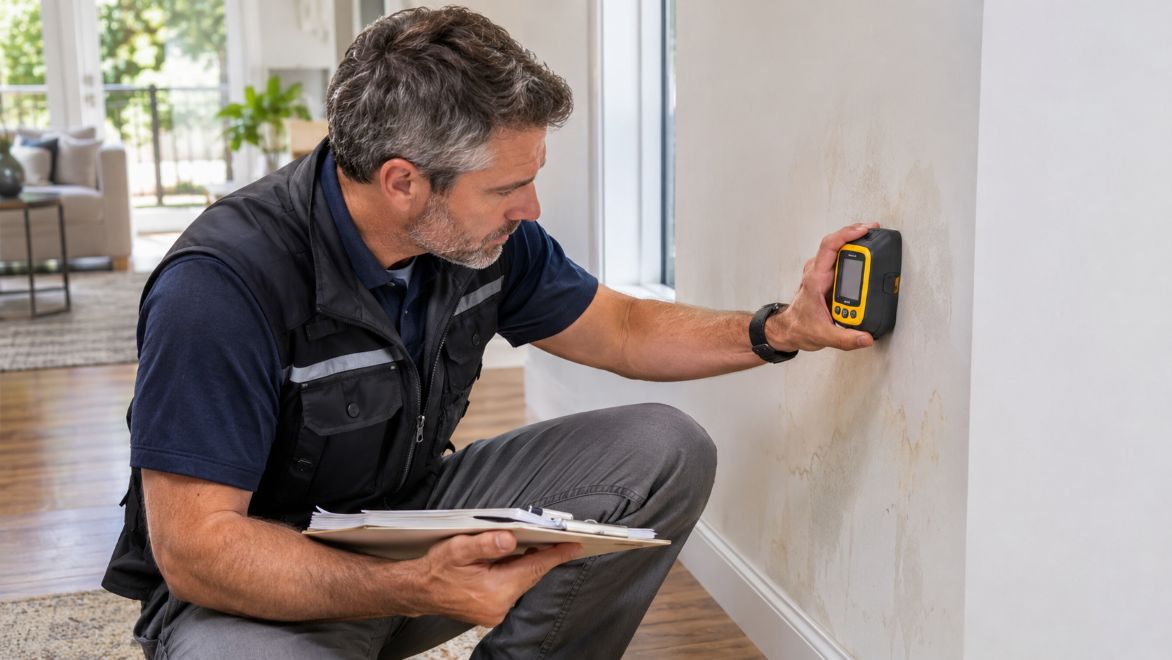
- Moisture meters help measure or compare moisture levels in selected building materials.
- Infrared cameras identify surface temperature differences that may indicate concealed moisture.
- Targeted inspections help determine whether affected cavities require further examination.
The Institute of Inspection, Cleaning and Restoration Certification (IICRC) explains that infrared cameras do not directly measure moisture. Suspicious thermal patterns should be verified with appropriate moisture-testing equipment.
Addressing Moisture and Drying Affected Materials
Effective repairs begin with correcting the water source. Depending on the problem, this may involve plumbing repairs, roof maintenance, improved drainage, or better ventilation.
When restoration requires changes to walls, doors, or interior layouts, homeowners should also consider security considerations during home renovations. Layout modifications can sometimes introduce overlooked vulnerabilities, making it important to review access points, visibility, and existing security features before completing the work.
Controlled drying may involve dehumidifiers, air-moving equipment, and repeated moisture measurements. Some saturated materials require removal when adequate drying cannot be achieved.
The EPA emphasizes that mold cleanup without correcting the moisture source is unlikely to provide a lasting solution.
Preventing Hidden Water Damage Through Routine Maintenance
Regular maintenance reduces the likelihood that concealed moisture will remain unnoticed. Homeowners can inspect plumbing connections, clean gutters, monitor humidity, and address small leaks promptly.
Seasonal inspections are particularly useful after heavy rainfall or changes in weather conditions. Keeping records of previous leaks and repairs also helps identify recurring problems.
Hidden water damage becomes easier to manage when warning signs receive timely attention. Consistent inspections, careful moisture monitoring, and appropriate repairs can help preserve building materials and support a healthier indoor environment over time.